The Life Audit: a coaching tool rebuilt in place.
Michelle Flynn’s signature tool deserved better than a default radar chart. We rebuilt it inside her live Wix site: same page, same URL, nothing else touched.
“I was never happy with the old wheel, but I was always told it was as good as it could be.”
Michelle Flynn, on the tool she had been living with
The brief

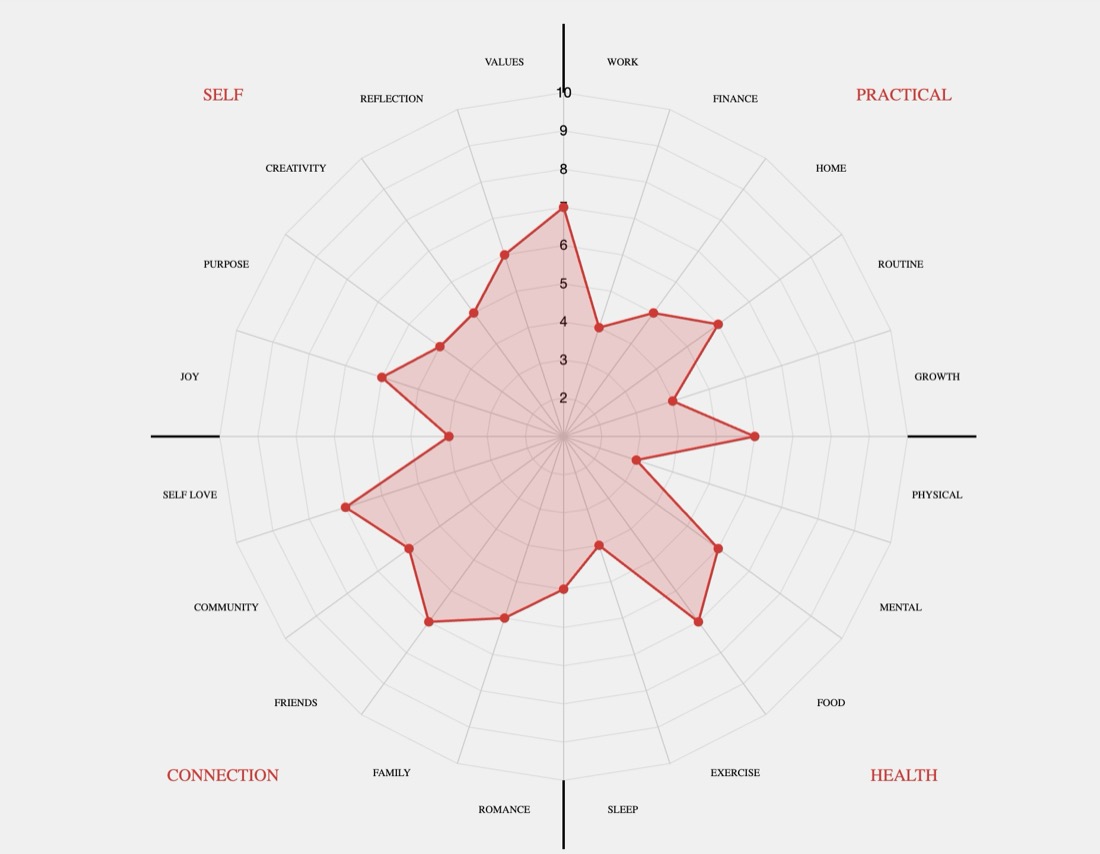
Michelle Flynn is a health and life coach in Shoreham-by-Sea. Her signature tool is the Life Audit: 20 areas of life, each scored 1 to 10, drawn together as a wheel. On paper it looks the part. The digital version on her Wix site did not. Scoring meant 4 gated steps with a Next button after each. The reward was a radar chart from a charting library, at its default styling, inside an embedded frame. She had been told by her previous developers that this was as good as they could get it. She lived with it for around 2 years.
One constraint shaped the job: her site works. The audit page ranks, her leads land there, and she edits the copy herself. So this was a replacement inside the page she already owns. A site rebuild was never on the table.
What happened
Discovery started from outside. Wix serves every page’s Velo code as a public bundle, so we read the old tool’s source before we had editor access. It showed the real behaviour: 47 score buttons driven by hand-written code, and a submission that saved only a name, an email and a date. The 20 scores were thrown away.
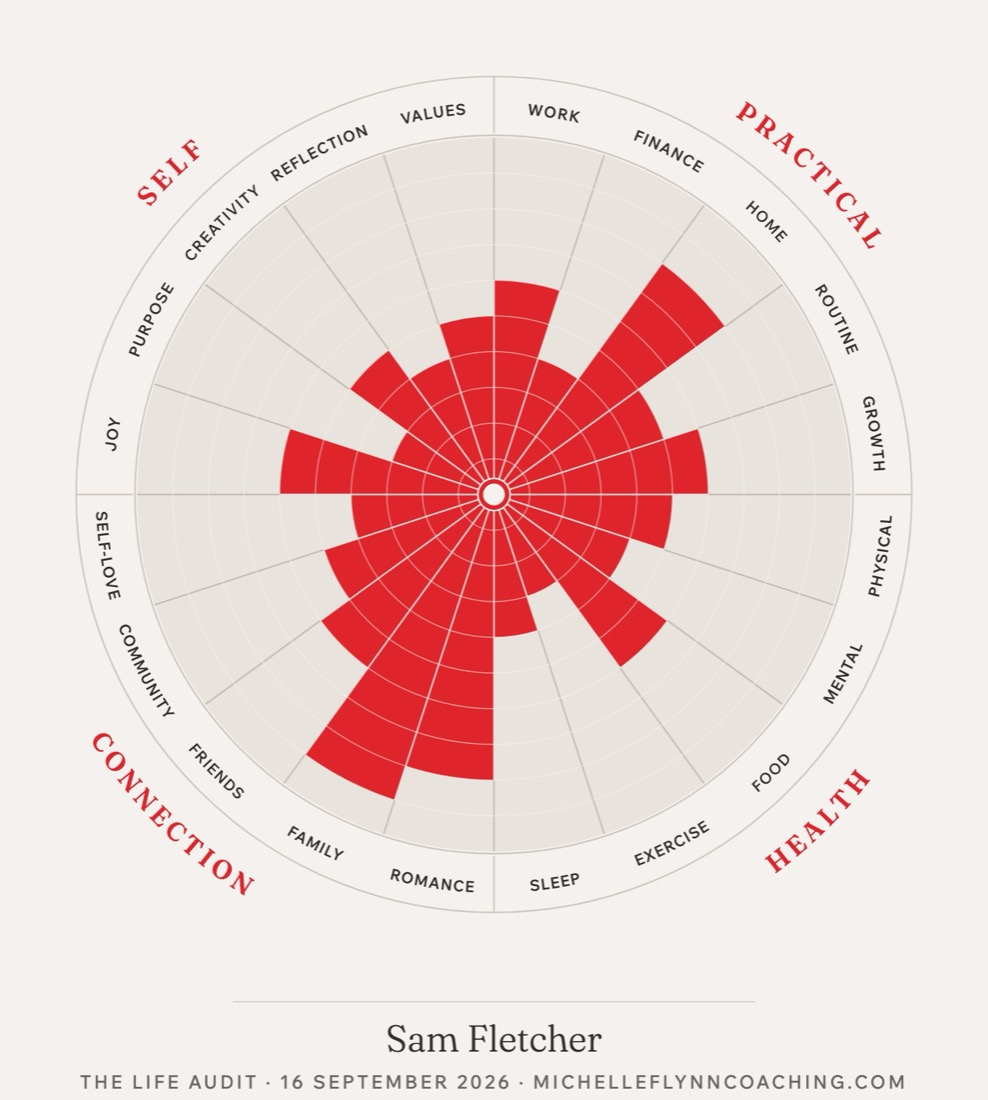
We rebuilt the tool as one web component. All 20 areas sit on one screen, and the wheel is hand-written SVG in her brand, with no chart library behind it. The email gate stayed, because the audit is her lead capture. The component went into the page as a Wix custom element, and a small backend module now writes each submission to her CMS with the scores attached, then notifies her by email.
The cutover kept her SEO. The new page took over the original /lifeaudit URL, the old page moved aside as a hidden fallback, and the whole swap went live in 1 publish. 4 people used the new wheel on launch day.
Working on a live site with an agent
Most of the build ran through Claude in Chrome: an agent driving the real Wix editor, the Wix IDE and the CMS in a browser. That only works with rules about what the agent may touch, and ours were simple. The agent never pressed Publish; a human held that button. It never edited the live audit page; all work happened on a hidden copy. It took a fresh screenshot before every click, because the editor moves elements between actions. And it verified by effect rather than by log: a CMS row proves a submission landed, a curl against the live URL proves a redirect. The same rules transfer to any agent working on a production system someone else owns.
What shipped
- All 20 scores on one screen, replacing 4 gated steps
- A results wheel drawn as SVG in her brand, filled from the centre like the paper worksheet
- Print and Save pills that produce the same branded PNG
- Scores stored against each lead, so a re-score in 3 months has a baseline
- The email gate kept, with honest copy and a linked privacy policy
- Cutover on the original /lifeaudit URL, with the old page kept for rollback